

As a new driver, the more experience you gain and the further you drive, the more you will encounter road markings that may be unfamiliar. While single and double yellow lines are a daily sight, red lines are far less common, yet understanding them is crucial. These lines are not just decorative; they are part of a wider traffic management system designed to keep traffic moving safely and efficiently. Failing to recognise or follow red route rules can lead to Penalties, disruptions, and even accidents, particularly in busy city streets.
Red routes are typically found on major roads, city centres, and other areas where traffic flow is critical. They are often accompanied by signs and specific restrictions that drivers must follow. Familiarising yourself with street-specific rules for red routes ensures compliance and reduces the likelihood of receiving a Penalty Charge Notice (PCN).
This article explains red routes, including what single and double red lines mean, how parking and loading operate in these areas, and the various restrictions that apply. Understanding red route rules is particularly important for residents, delivery drivers, or anyone moving house, as these rules may impact parking, loading, or access near a property. Knowing the rules also helps reduce risks for new drivers, ensuring safer journeys for all road users.
What Are Red Routes?
Red routes were first introduced in London in 1929 to ease traffic congestion on the city’s busiest streets. Today, they account for approximately 5% of London roads and are a key part of urban traffic management. On major roads where traffic is heavy, red routes are designed to maintain a smooth traffic flow and prevent congestion that can delay buses, emergency services, and other essential transport.
Red routes are also commonly found near hospitals, airports, and other areas where stopping is discouraged to allow uninterrupted traffic movement. Activities such as parking, loading, or unloading along a red route may require special permissions or dispensations, particularly if they could affect traffic flow.
Red routes are marked with single or double continuous red lines along the edge of the road closest to the kerb. These lines are reinforced with signed restrictions, which indicate where stopping, parking, or loading is permitted or prohibited entirely. Understanding these rules is crucial for anyone navigating busy roads in urban areas, whether driving a private vehicle, taxi, or delivery van.
Importance of Red Routes

Red routes are vital in busy areas, particularly in London, as they prevent vehicles from parking illegally and obstructing traffic flow. They form part of a broader traffic management strategy aimed at regulating traffic, reducing congestion, and ensuring public transport and emergency services can move efficiently.
Maintaining clear red routes is crucial to:
- Allow buses to adhere to schedules.
- Enable emergency vehicles to reach their destinations without delay.
- Keep pedestrians, cyclists, and road users safe.
- Reduce the likelihood of accidents and collisions in high-traffic areas.
Effective management of red routes ensures smooth traffic flow, minimises disruptions, and maintains safety on city streets. Enforcement of these rules guarantees that parking restrictions are followed and that safety hazards are avoided for all road users.
Defining a Red Route
Red routes are identified by road signs and road markings that clearly communicate the restrictions to drivers. They warn motorists that they cannot:
- Park their vehicle
- Stop their vehicle
- Load or unload, including moving goods or carrying out essential tasks, unless designated areas are used
Even when moving house, drivers must follow the red route restrictions. Loading or unloading is only permitted in designated bays or with proper permissions, ensuring that traffic is not disrupted.
Exceptions exist for certain vehicles, including:
- Vehicles stopping briefly to pick up or drop off passengers
- Emergency services are carrying out essential tasks
- Vehicles performing authorised waste collection or other essential services
Red routes are also marked with single or double red lines along the edge of the road closest to the kerb, making it easy to identify areas where restrictions apply.
Rules of a Red Route

Single red lines
Single red lines indicate that restrictions apply only during certain hours. Residents, delivery drivers, or anyone carrying out services along a red route must adhere to these restrictions during the times displayed on adjacent signs.
Planning loading or parking around these hours helps avoid PCNs and keeps traffic moving.
Double red lines
Double red lines indicate no stopping at any time. Violating this rule will result in a Penalty Charge Notice (PCN), which can be as high as £160 in London.
Compliance is essential to maintain smooth traffic flow, avoid fines, and protect road users.
Red route clearways
Where a layby exists in a red route area, stopping is permitted only if signs allow it. Always read road signage to confirm whether stopping, loading, or parking is allowed in that area.
Paying attention to the number of red lines, times displayed, and nearby signs can prevent fines and keep traffic moving efficiently.
Building Confidence on Red Routes
Driving on red routes, particularly in busy areas, can be intimidating for new or even experienced drivers. If you want to practice navigating red routes or simply build confidence, Totally Driving offers a refresher driving course designed for fully licensed drivers.
Our courses cover:
- Understanding single and double red lines
- Learning when and where loading/unloading is permitted
- Navigating major roads, bus routes, and congested city streets safely
- Reading road markings and nearby signs accurately
- Avoiding PCNs and staying compliant with traffic rules
Contact Totally Driving today to learn more and take a proactive step toward safer, more confident driving on red routes and in busy urban areas.
Enforcement of Red Routes
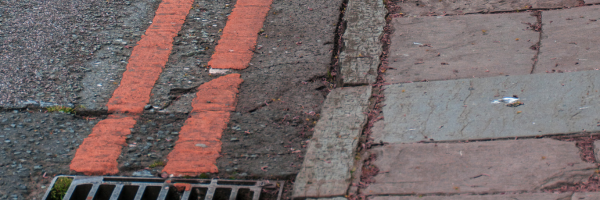
Enforcement of red routes is essential for keeping traffic moving smoothly on London’s busiest roads and major bus routes. To ensure that parking restrictions are followed and congestion is minimised, red routes are closely monitored using a combination of CCTV cameras and Civil Enforcement Officers. These methods allow authorities to quickly identify vehicles parked or stopped illegally on single or double red lines, or in red route clearways.
Vehicles found in violation, such as stopping where restrictions apply or parking on double red lines, may receive a Penalty Charge Notice (PCN). The standard penalty is typically £70, but this can be reduced to £35 if paid within 14 days. Clear road markings and prominent signs make it easier for drivers to see where stopping, parking, or loading is prohibited, so it is vital to always check the times displayed and follow the rules.
Who Does Enforcement Apply To
Red routes are strictly enforced, and not even Blue Badge holders are automatically exempt from restrictions. Unless a nearby sign explicitly allows it, Blue Badge holders must also comply. Similarly, private hire vehicles and licensed taxis are generally subject to the same rules, although they may be permitted to briefly stop to pick up or drop off passengers if signage allows.
Civil Enforcement Officers regularly patrol red routes, issuing PCNs to vehicles that break the rules. In addition, CCTV cameras provide round-the-clock monitoring, ensuring that enforcement is consistent and effective. This helps to keep major roads clear for buses, emergency services, cyclists, and other road users, reducing delays and improving journey times for everyone.
Exceptions and Benefits of Compliance
In the event of an emergency, drivers may be exempt from receiving a PCN if they have stopped for a genuine reason, such as a medical emergency or to allow emergency services to pass. However, it is important to follow proper procedures, like using hazard lights and contacting emergency services if necessary, to ensure safety and avoid unnecessary penalties.
The benefits of strict enforcement are clear: improved traffic flow, reduced congestion, and enhanced safety for all road users, including pedestrians, cyclists, and bus passengers. By following the rules, paying attention to road markings and signs, and using designated loading bays where permitted, drivers can help keep the city moving and avoid costly penalties.
If you’re unsure about the restrictions on a particular red route, always check the signs and road markings, and consult your local council or transport authority for guidance. Staying informed and compliant not only helps you avoid a PCN but also contributes to safer, more efficient roads for everyone.
Frequently Asked Questions
A red route is a road marked with single or double red lines where stopping, parking, loading, or unloading is restricted or prohibited to keep traffic moving smoothly, especially on busy urban roads and major bus routes.
Stopping or parking on double red lines is prohibited at all times. On single red lines, restrictions apply only during certain times shown on nearby signs. Always check the times displayed to avoid fines.
Blue Badge holders must follow red route rules unless signs explicitly allow stopping or parking. They can usually stop briefly to pick up or drop off passengers but cannot park on double red lines.
Vehicles parked in contravention of red route rules may receive a Penalty Charge Notice (PCN), typically £70, reduced to £35 if paid within 14 days.
Loading and unloading are only permitted in designated loading bays and during times shown on nearby signs. Loading on double red lines is generally not allowed.